One collection.
Clear boundaries.
How issuance, backing, market trading, and artwork fit together.
Follow a collection through the system
FLOOR also trades through a separate market. Market liquidity is not converter backing.
Two ledgers, one collection
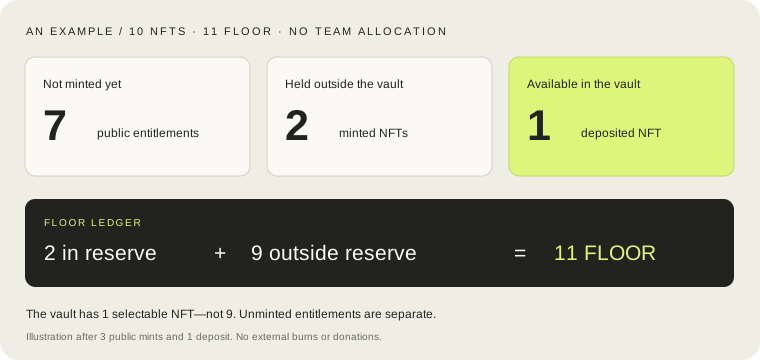
For N NFTs and T reserved team allocations, initial supply is (N + 1) FLOOR. T FLOOR funds team backing; N − T + 1 is allocated to pool initialization. The buffer creates no additional NFT.
S0 − R = (U + C + 1) × UNIT
R = (O + A) × UNIT
N = U + C + O + A
B ≥ R
U is unminted public supply, C accounted NFT inventory, O minted NFTs outside accounted inventory, and A unclaimed team rights. R is accounted FLOOR reserve, B actual FLOOR balance, and S0 initial token issuance. UNIT = 10^18. Actual outside balances also need external-burn and donation reconciliation; a market-data “circulating supply” is not this ledger.
Transaction boundaries matter
Both the canonical router and the demo vault router make their vault operation atomic. The demo vault buy combines any FLOOR shortfall purchase with the selected NFT redemption. Its NFT swap combines the source deposit and target redemption. If execution reverts, all asset movements in that vault transaction revert together. Approvals can be separate transactions and remain granted.
This atomicity applies to the vault actions. The demo primary mint flow can still purchase a FLOOR shortfall in a separate transaction before issuance; do not generalize the vault guarantee to every multi-step demo action.
Direct public mint calls still pay the immutable primary fee and fund reserve atomically with issuance. Fee revenue never becomes reserve backing. The deposit timer applies at the converter boundary; redeem has no separate timer check and requires available accounted inventory.
Commit first, reveal later
Folder preparation sorts artwork for inspection. Protocol preparation randomizes public assignments, commits them to a chain/collection-bound root, and retains private salts and records. Reveal proves an existing assignment; it does not perform a new shuffle. Public artifacts and private encrypted recovery material must remain separate.